Huwebes, Oktubre 13, 2016

Lesson 13: Visual Symbols


Image result for visual symbols

Visual Symbols
  • are representations of direct reality, which comes in the form of signs and symbols.
Image result for visual symbols

Drawings
  • a drawing may not be real thing but better to have a concrete visual aid than nothing. To avoid confusion, it is good that our drawing correctly represents the real thing.
Image result for drawing  clipart
Cartoons
  • another useful visual symbol that can bring novelty to our teaching is the cartoon. A first-rate cartoon tells its story metaphorically.
Image result for cartoons  clipart


Strip Drawings

  • a sequence of drawings in a newspaper, magazine, etc., relating a humorous story or an adventure.
Image result for Strip Drawings
Diagrams

  • “It is any line drawing that shows arrangement and relations as of parts to the whole, relative values, origins and development, chronological fluctuations, distributions, etc.” (Dale 1969)
Image result for diagram

Types of Diagrams

  • Affinity Diagram – used to cluster complex apparently unrelated data into natural and meaningful groups.
Image result for Affinity Diagram


  • Tree Diagram – used in increasing details or various tasks that must be accomplished to complete a project.

  • Fishbone Diagram – cause-and-effect diagram. 
Image result for fishbone diagram template powerpoint

Charts it is a diagrammatic representation of relationships among individuals within anorganizations.

Image result for charts and graphs

Types of Charts

Time Chart tabular time chart that presents data in ordinal sequence.

Image result for time chart clipart


Tree or Stream Chart  depicts development, growth and change by beginning with a simple course with spread outs into many branches.

Image result for Tree or Stream Chart

Flow Chart  visual way of showing a process from beginning to end.

Image result for Flow Chart

Organizational Chart  shows how one part of the organization relates to other parts of the organization.

Image result for Organizational Chart

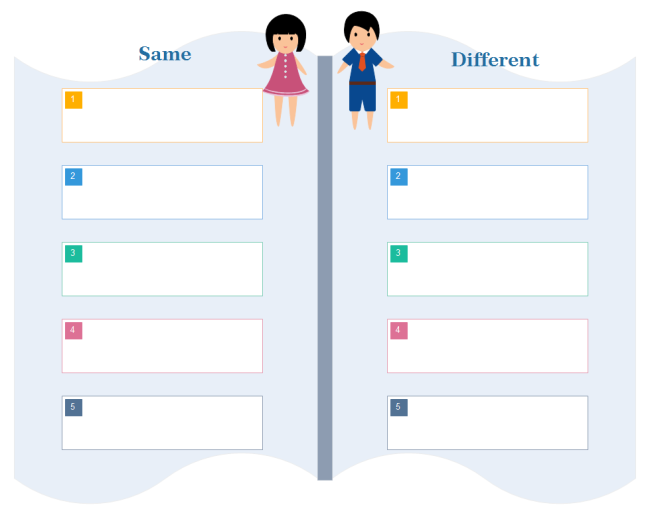
Comparison and Contrast Chart  shows similarities and differences.


Image result for Comparison and Contrast Chart

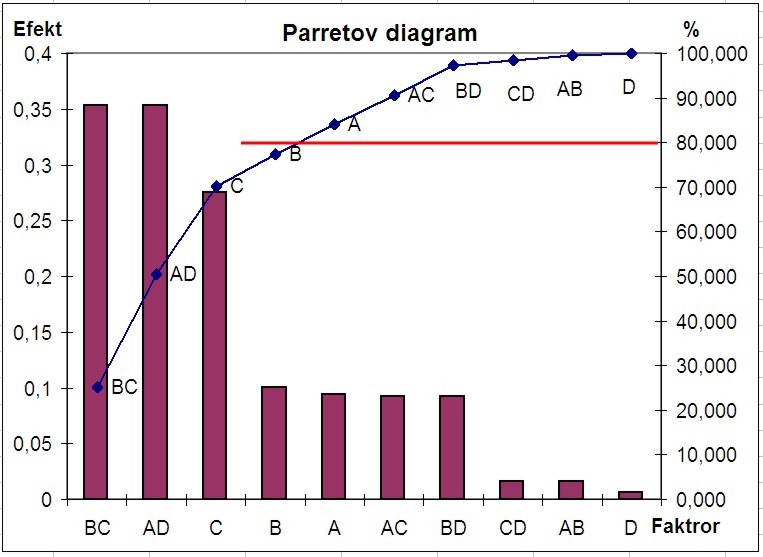
Pareto Chart  type of bar chart, prioritized in descending order of magnitude or importance from left to right.

Image result for Pareto Chart

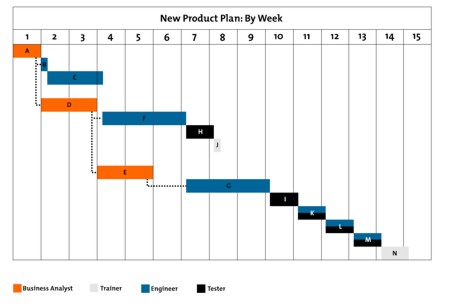
Gantt Chart  is an activity time chart.

Image result for Gantt Chart
Graphs
  • Pictures that help us understand data.

 Image result for Graphs


Types of Graphs

 Circle Graph  recommended for showing parts of whole. 

Image result for Graphs

Bar Graph  use in comparing the magnitude of similar items at different ties or seeing relative sizes of the parts of a whole.

Image result for bar Graphs

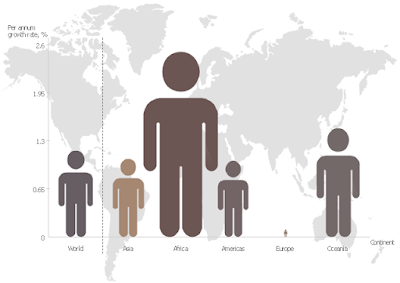
Pictorial Graph  make use of picture symbols.

Image result for Pictorial Graph

Graphic Organizers  you met several graphic organizers in your subject, principles of teaching.
 Image result for Graphic Organizers

Maps
  • Is a representation of the surface of the earth or some part of it.

 Image result for maps

Types of Maps

  • Physical Map  altitude, temperature, rainfall, precipitation, vegetation and soil.

 Image result for Physical Map clipart

  • Relief Map  three dimensional represents and show contours of the physical data of the earth or part of the earth.
 

  • Political Map  gives detailed information about country, provinces, lakes, rivers etc.

 Image result for Political Map clipart
  • Poster is a large print, ad or decoration that can be displayed or hung in the wall.

Lesson 12: The power of Film, Video and TV in the Classroom


Image result

“Next to the home and school, I believe television to have a more profound influence on the human race than any other medium of communication.” – Edgar Dale


Image result for film clipart

The Film, the Video and the TV are indeed very powerful. Dale (1969) says, they can:

  • Transmit a wide range of audio – visual materials, including still pictures, films, objects, specimen and drama.
  • Bring models of excellence to the viewer.
  • Bring the world of reality to the home and to the classroom through a “live” broadcast or as mediated through film or videotape.
  • Make as see and hear ourselves world events as they happen.
  • Be the most believable news source.
  • Make some programs understandable and appealing to a wide variety f age and educational levels.
  • Become a great equalizer of educational opportunity because programs can be presented over national and regional network.
  • Provide us with sound and sights not easily available even the viewer of a real event though long shots, close up, zoom shots, magnification and split screen made possible by the camera.
  • Can give opportunity to teachers to view themselves while they teach for purposes of self-improvement.
  • Can be both instructive and enjoyable.

Image result for limitation of tv

While the film, video and TV can do so much, they have their own limitation.
  • Television and film are one-way communication device. Consequently, they encourage passivity.
  • The small screen size puts television at a disadvantage when compared with the possible size of projected motion pictures.
  • Excessive TV viewing works against the development of child’s ability to visualize and to be creative and imaginative, skills that are needed in problem solving.
  • There is much violence in TV.

Basic Procedure in the Use of TV as a Supplementary Enrichment

1. Prepare the classroom


Image result

2.   Pre-viewing Activities
a.    Set goals and expectation.
b.   Link the TV lesson with past lesson and / or with your student’s experience for integration relevance.
c.    Put the film in context.
d.   Point out the key points they need to focus on.


Image result for group activities clip art

3. Viewing
a.    Don’t interrupt viewing by inserting cautious and announcements you forget to give during the previewing stage.
b.   Just make sure sights and sounds are clear.


Image result for viewing clip art

4.  Post – Viewing


Image result for reminiscing the movie clipart

To make the feel ease begins by asking the following questions:
  • What do you like best in the film?
  • What of the part film makes you wonder? Doubt?
  • Does the film remind you of something or someone?
  • What question are you asking about the film?
  • The film, video, and TV are powerful instructional tools.
  • When they are used appropriately and moderately, they can make the teaching-learning process more concrete, lively, colorful and interactive.
  • Misuse and abuse of their use in the classroom and even at home has far reaching damaging effects in the development of children’s imaginative and thinking powers and sensitivity to human life.
Image result for limitation of tv

The Effects of TV

  • We agree that the TV can give a more accurate, more lively and more colorful presentation of a difficult topic in physics for instance when the one who teaches the topic is inexperienced and can only make use of still pictures in black and white as visual aid.
  • We are aware of the numerous educational benefits of the use of the TV.
  • The effect of TV depends on how it is used.
  • When used in excess, it can also impair the development of children’s ability to visualize, to be creative and imaginative. Worse, is when children gets exposed to violence in TV.

Image result for thinking clipart


Social psychologist Craig A. Anderson gave this testimony to the US senate on March 21, 2000:

“The Media violence effect on aggression is bigger than the effect of exposure to lead on IQ scores in the children, the effect of calcium intake on bone mass, the effect of homework 0on academic achievement, or the effect of asbestos exposure on cancer… high exposure to media violence is a major contributing cause of the high rate of violence in modern US Society.”

Let us use the TV appropriately and moderately so that we can take advantage of its advantage and mitigate its disadvantages.

Using Video in the Classroom

Image result for students watching tv clipart

Does video have a place in the classroom?
   According to a 1992 study conducted by Synergy Broadcast Systems, “Video in the classroom is an important tool used to support the four key components of learning.”

Four Key Components


  • Active Engagement
Image result for participate in class clipart
  • Participation in Groups
Image result for participate in class clipart
  • Frequent Interaction and Feedback
Image result for Interaction clipart


  • Connection to Real-World Experts
Image result for Connection World clipart


Why Use Video in the Classroom?
  • We remember 70% to 90% of what we see, hear and do.
  • Using video, creating content and producing an end result that will allow students to do all three.
Image result for technology has changed


Technology has changed
  • Due to changes in technology, video tools are more accessible than ever before.
  • Students will be using technology throughout the course of their scholastic career. The sooner they have access, the better.
Image result for color film strip clipart


Ways video helps assist classroom assignments:
  • Supports differentiation.
  • Stimulates classroom discussion.
  • Reinforces readings.
  • Provides creative output.
  • Allows students to interact with classrooms throughout the world.

Recommended Video Tools and Resources

  • iMovie
Image result for i movie logo

  • Sony Vegas
Image result for sony vegas logo

  • Animoto
Image result for Animoto logo

  • Gizmoz
Image result for Gizmos logo

  • YouTube
Image result for youtube logo

  • Jing
Image result for jing logo


Advantages
  • Video can be utilized to illustrate how something works.
  • Video provides information in detail that text and graphic cannot.
  • Video can grab student’s attention.
  • Video can show real life examples.
  • Video stimulates discussions.
  • Video can appeal to the learning styles of visual learners.
  • Video could enhance problem-based learning.
Image result for advantage clipart


Using Film in the Classroom
At Film Education, we believe that films is a power tool that can help learners understand and access that world and other worlds.
  • Real and imagined
  • Parts of our remit is to in courage young people to learn by viewing and to be critical consumers of what they see as an ability and analyze film is an empowering skill and one that is increasingly important for young people.
  • Film Education’s website and materials offer teacher a wealth resource for incorporating film into the elementary school to high school.
  • Let face it, using film – whether watching them or actually making them – is often a heat motivator for students of all ages.
  • There are teacher all over the world who are including youtube or film clip in their lesson.

Image result for advantage clipart

Three (3) tips for using Film in the Classroom
  1. You tube is your friend, but Clean tube is better.
  2. Keep it short and upbeat, generally there’s a law of diminishing returns regarding the length of film.
  3. Use it at the start or the end of the lesson.

Image result for making film clipart

Three (3) tips for Making Films in Class
  • Teaching students how to make film.
  • Build in play time let students muck around with the different titles and effect.
  • Sometimes, it’s not about quality it’s all about the story.

Image result for teaching clipart

How can Film help you Teach English
  • Learning from films is motivating and enjoyable.
  • Film provides authentic and varied language.
  • Film gives a visual context.
  • Variety and flexibility.
  • Exposes the student to spoken language.
  • Useful in teaching vocabulary.
  • It contextualizes language through the flow of images, making it more accessible.
  • Film also offers an enlargement of our knowledge of the world and the cultures that it contains.

Image result for using film in classroom clipart


How to use Films in Teaching
  1. Find something you like.
  2. Choose something you can understand 70-90% (without substitutes or other help)
  3. Don’t use subtitles in your own language.
  4. Watch several times.
  5. Start with English subtitles, then watch again without subtitles.
  6. You don’t have to spend a lot of time ten minutes a day is better than nothing.


Lesson 11: Making the Most of Community Resources and Field Trips

Image result for travel and tours clipart

“Field Trips offer an excellent bridge between the work of the school and the work of the world outside.”

Field Trips are expensive. They require much time for preparation and planning. However, considering the intensity and the extent of concrete experiences that come through field trips, we are encouraged to use them Only, if there is no other less expensive but equally effective instructional tool. Preparation and planning for the field trip includes discussions and decisions on what to do before the field trip, during the field trip and after the field trip.

Community resources like historical and scenic spots, museums, zoos, botanical gardens, places, of exhibits can be destinations for field trips. Other community resources can be people themselves such as parents, senior citizens and other members of the community.


Image result for planning a field trip clipart

Planning a field trip includes these steps:

• Preliminary planning by the teachers
• Pre-planning with others going on the trip
• Taking the field trip itself
• Post-field trip follow up activities

Image result for planning clipart

Pre-planning with others joining the trip

  Other people accompanying the group need to be oriented on the objectives, route, behavior standards required of everyone so they can help enforce these standards.

Image result for planning a field trip clipart

Taking the field Trip Itself

• Distribute route map of places to be observed
• Upon arriving at the destination, teacher should check the group and introduce the guide.
• Special effort should be made to ensure that:
• The trip keeps to the time schedule
• The students have the opportunity to obtain answers to questions
• The group participates courteously in the entire trip
• The guide sticks closely to the list of questions.

Image result for customer benefits

Educational Benefits derived from a field trip

   Field trips can be fun and educational when they are well executed. They offer us a number of educational benefits:

• The acquisition of lasting concepts and change in attitudes are rooted on concrete and rich experiences which are fundamental to learning that lasts.

• Field trips bring us to the world beyond the classroom. The real world connection is more work but the benefits of broadening teaching beyond textbooks far outweigh the little bit of time it takes from a teacher’s schedule.

• Field trips have wide range of application. It is not meant only for children. It is for adults also.
• It can bring about a lot of realizations which may lead to changes in attitudes and insights. The field trip “ can nurture curiosity; build a zest for new experience and a sense of wonder.” ( dale, 1969).


Permission Slip

     A permission slip in the United States is a form that a school or other organization sends home with a student to a parent in which the parent provides authorization for minor children to travel under the auspices of the school or organization for some type of event, such as a field trip.


Image result for waiver

Waiver
     A document recording the waiving right or claim.


Image result for fun itinerary example

Itinerary

      A schedule of intended destinations and activities for travelers


Image result for evaluating cliprt

Evaluating Field Trip

      There are questions we can ask ourselves after the field trip to evaluate the field trip we just had.


Image result for disadvantage

Disadvantages of  FieldTrips:
   
These educational benefits can compensate for drawbacks of field trips, some of which are:

• It is costly
Image result for costly clipart
• It involves logistics

Image result for involves logistics clipart

• It is extravagant with time

Image result for time consuming

• It contains an element of uncertainty

Image result for uncertainty

Community Resources
      
      A field trip may be a visit to scenic spot or to a historical place.

Image result for community resources

These can be persons and places in the community. Many of them can be resource speakers in their fields of expertise.

Image result for workers in the community

• A dentist may be invited to talk to the children on how to take care for their teeth.
• A journalist may serve as resource speaker on the parts of a newspaper and how to write an editorial.
• A dynamic teacher will find a way to have a record of parent’s names, contact number, occupation, and other pertinent data she needs.
• There are other people in the community who can be excellent resource speakers.
• A senior citizens and a war veteran in the community may be invited to class for an interview on a topic of which he is expert, for example, his memories of World War II.
• A barangay captain may be asked on what the barangay intends to do to curb the rampart alcoholism among the youth in the community. 

Image result for fieldtrip
Field Trip

      As to places to visit, popular destinations are museums, zoos, botanical gardens, historical places, places of exhibits, scenic spot. Performances like a play, a concert, and a dance presentation also form part of the community resources.
Field trips are expensive. They require much time for preparation and planning.
Preparation and planning for the field trips includes discussions and decision on what to do to before the field trip, during the trip and after the field trip.

A Field Trip: A bridge of the school and the community

Field trips abolish the “walls” that divide the classroom and the outside world.
Field trips also connect people. All people involved in the field trip – students, teachers, parents, and school head – come together for joint planning.

Image result for field trip quotes